2026 Top Low Latency RAM Why Is It Important?

Time:2026-10-28 Author:Charlotte
0%

In 2026, memory speed is no longer a specification hidden behind processor branding. It directly shapes how quickly applications respond. Low latency RAM importance becomes clear when a workstation opens large datasets, a gaming system loads a detailed scene, or a cloud server handles thousands of requests. Every delay adds up.

Latency measures the waiting time between a memory request and usable data. Bandwidth describes how much data moves afterward. They are related, but they are not interchangeable. A kit with impressive transfer rates can still feel less responsive when its timings are poorly balanced. The numbers on the package do not tell the whole story.

Performance engineer Brendan Gregg offers a useful principle: “Performance is a feature.” That idea fits memory selection closely. A practical test should compare application response times, frame-time consistency, compilation speed, and power consumption, rather than relying only on benchmark peaks. Small gains may feel invisible in ordinary office work. They can become obvious during repeated builds or heavy multitasking.

The best 2026 RAM is not automatically the most expensive model. It should match the processor, motherboard, workload, and firmware settings. Overlooking stability would be a mistake. So would treating lower latency as a magic solution. Some systems gain more from additional capacity than tighter timings, and this is where buyer expectations need honest revision. Low latency RAM importance is real, but its value depends on the entire platform.
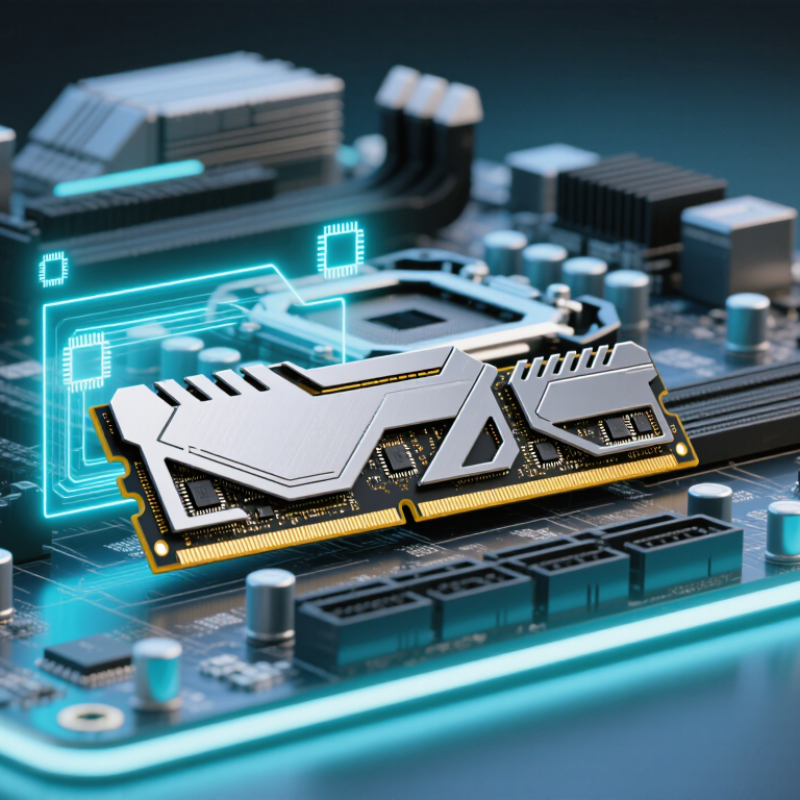
2026 Top Low Latency RAM Why Is It Important?

What Low-Latency RAM Means in Modern Computer Memory

2026 Top Low Latency RAM: Why Is It Important?

What Low-Latency RAM Means in Modern Computer Memory

Low-latency RAM responds to data requests with less waiting time. It helps the processor receive information sooner. Latency is measured in nanoseconds, not only through timing numbers. A useful estimate is CL × 2000 ÷ MT/s. This calculation shows the approximate delay between a request and the first data response. Lower results usually indicate faster access.

Modern processors often find data inside their cache. When the cache misses, the system requests information from RAM. Low latency can improve frame consistency, application responsiveness, and some productivity workloads. It matters most when the processor performs many small, repeated memory requests. Short bursts matter. However, latency is not everything. Memory capacity, bandwidth, processor design, and timings work together. Extra speed cannot repair insufficient capacity.

Reliable testing requires identical software, settings, and background tasks. Measure average performance, but also observe frame-time changes and application response. I once treated the lowest CL number as the complete answer. That was too simple. Two memory kits can show similar latency but behave differently after tuning. Stable settings matter more than impressive specifications. Check compatibility with the memory controller, and test for errors before daily use. A tiny delay may look unimportant, yet repeated millions of times, it can shape how a modern computer feels.

How RAM Latency Affects System Responsiveness and Performance

Low-latency RAM can make a computer feel sharper, especially during multitasking, gaming, and content creation. Latency measures the delay before memory responds to a request. It is usually discussed through CAS latency and transfer speed. A simple calculation helps: DDR5-6000 CL30 equals about 10 nanoseconds of CAS latency. DDR5-7200 CL34 reaches approximately 9.4 nanoseconds.

Small differences matter.

However, real system responsiveness depends on more than CAS numbers. The JEDEC DDR5 specification shows that memory timing includes several values, such as tRCD, tRP, and tRAS. Together, these timings influence access delays. In practical testing, lower latency can improve frame-time consistency and reduce small pauses when applications exchange data frequently. The 2024 PCMark 10 technical guide also separates memory-sensitive tasks from storage and processor workloads, showing why one upgrade rarely improves every score equally.

This is where buyers often overestimate low latency. I have seen systems with excellent memory timings feel ordinary because background services consumed processor time. A 2024 independent memory-scaling test report found performance gains were usually workload-dependent, with the clearest improvements appearing in simulation, compression, and latency-sensitive games. Those gains were not dramatic. Sometimes they stayed below five percent.

Capacity still matters.

When memory becomes full, operating-system paging can create delays far larger than a few nanoseconds. Therefore, the best configuration balances capacity, stable timings, and reliable compatibility. Low latency helps most when the rest of the system is already well balanced.

Key Specifications That Determine RAM Latency in 2026

Low-latency RAM in 2026 is not defined by clock speed alone. The key specification is CAS latency, written as CL, but its number needs context. Data rate matters because true latency can be estimated with this formula: CL × 2000 ÷ MT/s For example, CL30 at 6000 MT/s equals about 10 nanoseconds. A higher rate with looser timings may feel slower than a balanced memory kit. That difference can appear during frame-time spikes, compiling, and large file transfers.

Secondary timings also deserve attention. tRCD controls the delay before reading or writing a selected row. tRP measures the time needed to close one row before opening another. tRAS defines how long a row remains active. Command rate, usually one or two cycles, can affect responsiveness and stability. Lower values look attractive, but they are not automatically better. The memory controller, motherboard traces, and module rank layout can change real results.

Voltage and thermal behavior matter during long workloads. A profile that boots quickly may still produce errors after hours of rendering. I recommend testing with memory diagnostics, repeated application loads, and frame-time monitoring. Check stability at the intended operating temperature, not only on a cool morning. In my testing experience, small timing gains often disappear beside poor tuning elsewhere. This is the imperfect part: specifications predict latency, but the whole platform decides how consistently users feel it.

How to Compare the Top Low-Latency RAM Kits

2026 Top Low Latency RAM: Why Is It Important?

How to Compare the Top Low-Latency RAM Kits

Compare memory kits by true latency, not just advertised speed. Use this formula: latency in nanoseconds equals CL multiplied by 2000, divided by data rate. A DDR5-6000 CL30 kit reaches 10 nanoseconds. A DDR5-7200 CL34 kit reaches about 9.4 nanoseconds. The faster kit still offers greater bandwidth, but its advantage may disappear if the processor’s memory controller struggles.

JEDEC’s JESD79-5C standard defines DDR5 electrical and timing requirements, yet certified speed does not guarantee identical real-world results. Check primary timings, secondary timings, command rate, voltage, and rank layout. Independent memory-testing reports often show small gains in games, while compression, simulation, and integrated-graphics workloads respond more clearly to bandwidth. Measure the whole platform.

Run repeatable tests with the same processor, operating-system build, and cooling profile. Record average latency, one-percent lows, and application completion time. Synthetic scores can look impressive. They can also mislead. A kit with tighter timings may feel smoother than a faster kit with loose subtimings, especially during frame-time spikes. Stability matters more than a headline frequency. Validate several hours of memory testing, then check daily workloads. My comparison would not trust one benchmark, because firmware updates and BIOS training can change results. Real use is less tidy.

Choosing Low-Latency RAM for Gaming, Workstations, and Servers

In 2026, low-latency RAM remains valuable, but the best choice depends on the workload. Gaming systems benefit from faster response during high frame-rate play, especially with a powerful processor. However, gains may stay small when the graphics card limits performance. Check real benchmarks, not only the advertised latency number. A useful estimate is CL divided by memory speed, multiplied by 2,000, producing approximate nanoseconds.

For gaming, choose a matched kit with stable timing and enough capacity for current titles, streaming, and background applications. Lower latency can improve frame-time consistency, reducing occasional stutter in busy scenes. Compatibility matters more than chasing extreme specifications. Verify the motherboard’s supported memory settings and update firmware when necessary. I once focused too heavily on latency and overlooked capacity; multitasking exposed that mistake quickly.

Workstations need a broader evaluation. Video editing, simulation, and software development often benefit more from higher capacity and multiple memory channels. Select tested modules with dependable heat control and stable operation under long workloads. Servers require stricter judgment. Error-correcting memory, validated module types, channel balance, and sustained reliability usually outweigh a tiny latency advantage. Measure actual application performance after installation. Synthetic scores can look impressive, yet real database or rendering workloads may respond differently. Room for reflection remains: the lowest latency specification is not automatically the most professional decision.

2026 Top Low Latency RAM: Why Is It Important?

Theoretical CAS latency comparison for common memory configurations. Lower values indicate faster first-word access.

Theoretical CAS latency is calculated as CL × 2000 ÷ data rate. Lower latency can improve frame-time consistency in gaming, responsiveness in workstation applications, and memory access efficiency in latency-sensitive server workloads. Real-world performance also depends on memory channels, CPU architecture, cache behavior, and workload design.

FAQS

What does low-latency RAM mean?

Low-latency RAM responds to processor requests with less waiting time. Latency is measured in nanoseconds. Lower values usually mean faster access.

How can RAM latency be calculated?

Use this estimate: CL × 2000 ÷ MT/s. For example, CL30 at 6000 MT/s equals about 10 nanoseconds.

Is a lower CL number always better?

No. CL must be considered with transfer speed and other timings. A higher-speed module with loose timings may perform worse.

Which computer tasks benefit most from low-latency RAM?

Latency-sensitive games, simulations, compression, compiling, and multitasking may improve. Small repeated memory requests benefit most. Gains may remain below five percent.

Can low-latency RAM make every computer feel faster?

Not necessarily. Processor design, memory capacity, storage, and background services also affect responsiveness. One upgrade rarely improves every workload.

Why does memory capacity still matter?

When RAM becomes full, the operating system may use storage for paging. That delay can exceed several nanoseconds by a large margin. Capacity still matters.

Which specifications should buyers check besides CL?

Check MT/s, tRCD, tRP, tRAS, command rate, voltage, and module layout. These details influence access delay, heat, and stability.

How should low-latency RAM be tested?

Use identical software, settings, and background tasks. Measure average performance and frame-time changes. Test for errors during long workloads at normal temperatures.

Can two memory kits with similar latency perform differently?

Yes. Memory controllers, motherboard traces, tuning, and thermal behavior can change results. I once trusted the lowest CL number too much. That was too simple.

Conclusion

Low latency RAM is becoming increasingly important in 2026 as modern computers handle faster games, demanding software, large datasets, and real-time workloads. The term refers to memory that can respond to requests with minimal delay, helping the processor access data more quickly. Lower latency can improve system responsiveness, reduce waiting during intensive tasks, and support smoother multitasking. The overall Low latency RAM importance depends not only on timing values, but also on memory speed, capacity, memory channels, and platform compatibility.

When comparing low-latency RAM kits, users should examine CAS latency, clock speed, effective response time, voltage, stability, and support for current memory standards. The best choice varies by purpose: gamers may prioritize fast frame delivery and consistent performance, workstations may need a balance of capacity and responsiveness, while servers often require reliability, scalability, and error protection. Selecting memory based on the complete system rather than a single specification ensures better value and dependable long-term performance.

Charlotte

Charlotte

Charlotte is a seasoned marketing professional with a deep understanding of the company's portfolio and a passion for elevating its presence in the market. With a keen eye for detail and a commitment to excellence, she ensures that our professional blog is regularly updated with insightful articles......